Showing posts with label Craft. Show all posts

Tuesday, February 15, 2011

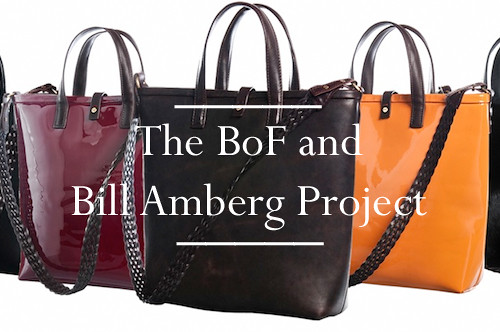
The BoF and Bill Amberg Project


Today, Bill Amberg Accessories Ltd. and The Business of Fashion announce the launch of the Calgary, a co-designed, co-conceived design project and crowdsourcing experiment which will help better understand and spark conversation about how the collective wisdom of crowds could shape fashion businesses, big and small, in years to come.

The BoF's Imran Amed, like us, is a long time fan of Bill Amberg's much coveted leather products and this project is a welcome union of their two areas of expertise. As you should all know, from their studio in North West London, Bill Amberg create stunning bags to travel, work and enjoy for a lifetime. Each and every one of Bill’s bags are unique, practical and most importantly beautiful. Similarly, the Business of Fashion should need no introduction. Since the inception of this indispensable site in 2007, Imran Imran has emerged as one of the leading thinkers on the profound changes that digital media are having on the fashion industry. Rather than a straight forward design collaboration, this project positions itself as an opportunity to learn about the creative and development process of high-end leather goods production and is more an an impromptu experiment with crowdsourcing, which is currently such a hot topic in the fashion business. The landscape of fashion communication and commerce continues to evolve radically and crowdscourcing is just one development (as discussed by the FT last weekend) and this project is keen to explore the potential benefits.
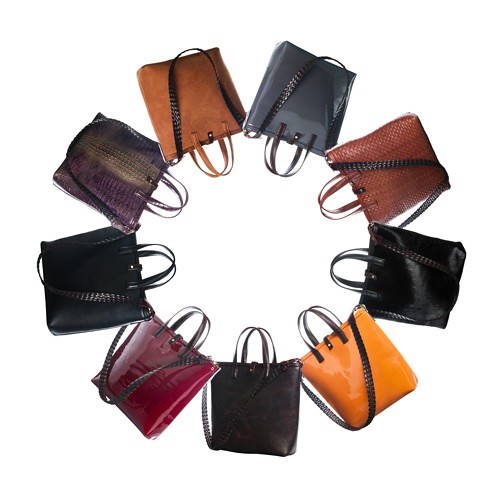
The full Calgary spectrum

Aside from the intriguing crowdsourcing angle, the project of course involves the creation of a heart racingly good accessory. With the Calgary, the world's of Bill Amberg and The Business of Fashion collide and the result is a stunning range of unisex tote style bags, a balance of function. Named after Imran's hometown, the bags were designed and created at The Bill Amberg Studios in London, each one hand made by a Bill Amberg leather craftsman. Stylish and elegant on the outside, functional on the inside. The bag is designed to fit the lifestyle of the busy, modern gentleman or gentlewoman. The bag is entirely padded with neoprene to protect technology, and includes specially designed pockets for iPads, Blackberries, and iPhones. Perfect for fashion week...

The BoF's very own Imran Amed road testing his Calgary in New York. 
Shot by Susie. 

It has been more than a year in the making and Imran has met with Bill several times over the past twelve months to fine tune what was originally intended to be a small project, but has organically grown into something more interesting, substantial, and very BoF. Here we talk to Imran to learn more about the project and take a closer look at the range...
----------

SS: You, like us, have been a huge fan of Bill Amberg leather products but how did your admiration evolve in to a co-designed range?
Imran Amed: I first met Bill at Pitti Uomo one year ago. When a CNN journalist called me later that same day to chat about luxury brands best suited to the post-recessionary environment in 2010, Bill Amberg was top of mind. After I filmed an interview clip in his store, Bill asked if I might like to work on a bag with him. The collaboration grew from there.

SS: Named after your hometown, the Calgary range is is a unisex tote bag that balances fashion and function effortlessly. Could you talk us through the collaborative dynamic of the project, including your working relationship with Bill and his team.
Imran Amed: Bill and I first started discussing ideas for the bag over a year ago. I have met with Bill and his team team regularly over the past twelve months, at first to discuss ideas for the bag, to watch as the first prototype was built, to provide feedback on the prototype and then to discuss the launch strategy. We have learned a lot from each other from out various vantage points and areas of expertise, Bill with design and craftsmanship and BoF with our understanding of digital media.


Calgary Black (limited edition)


SS: The range has the demands and requirements of modern life at it's design heart. What are the key design elements?
Imran Amed: There are special pockets for all sorts of technology and the bag is entirely padded with neoprene for additional protection. There is also a removable shoulder strap, which is functional as well as being a nice design detail.

SS: Now, I spotted you road testing the bag at NYFW, how is it coping with the assault of relentless shows and presentations?
Imran Amed: Really well! I am always carting around so much with me during fashion week, and now everything has its rightful place.


Calgary Tan Nubuck (limited edition)


SS: The launch incorporates an intriguing and exciting experimental element, crowdsourcing. Three other versions will be created based on data provided by the users of BoF over a period of three weeks. Could you talk us through the logistics and mechanics?
Imran Amed: Originally we planned to do only one version of the bag, but Bill really liked the silhouette of the bag and saw potential to do it in several materials and colours. Six of these will be limited edition bags, available for sale right away and for three other bags we are seeking feedback to help us decide which versions to produce, in which quantities. We will share the results and lessons learned with BoF readers.


Calgary Tan Woven (limited edition)


SS: The crowdsourcing element is an experiment that develops the role of the consumer, here they are active participants in production. Despite the relationship between digital media and fashion being in its infancy, you have long been one of the leading thinkers on the profound changes that have already taken place. Is this the future of retail?
Imran Amed: I'm not sure I would say it is the definitive future, and not all consumers want to get involved in providing feedback, preferring instead to take a strong lead from designers, but there are evidently others who enjoy participating in the creative process.


SS: Now, you started the BoF back in 2007 and have since gained a global following as an essential daily resource for fashion creatives, executives and entrepreneurs in over 150 countries. What's next? How would you like to see this indispensable site evolve?
Imran Amed: We'd like to continue sparking and catalysing conversations in fashion boardrooms, classrooms and studios around the world about the opportunities and risks afforded to us by new new digital tools and business models. This little impromptu crowdsourcing experiment is just one example of that.
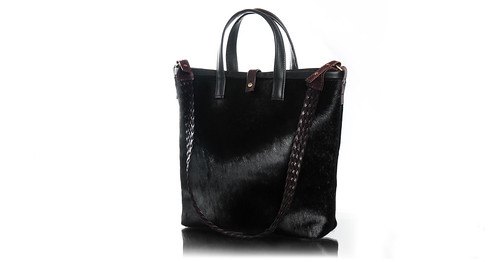

Calgary Black Ponyskin (limited edition)
----------

The launch of the Calgary is accompanied by an interactive video created by CraneTV, showing how the bag was designed and created. Furthermore, the video employs hotspotting technology enabling consumers to 'click-to-buy'/'click-to-vote'...


----------

As discussed above, for three of the (non limited-edition) bags, the project involves a crowdsourcing survey. The survey will determine which bags are most popular and which ones should be produced, and in what quantities. For those of you who would like to be involved, Imran Amed has created a customised survey link. Use your power wisely.

Monday, February 14, 2011

Made in England on Channel 4

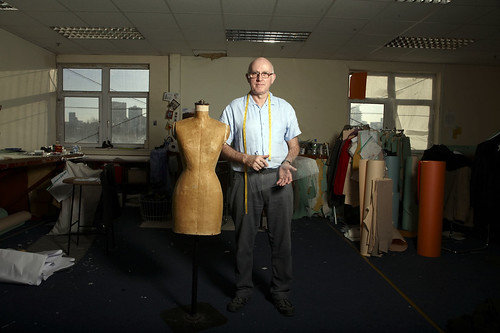
Michael Stoll and James Eden outside Cooper and Strollbrand.
A still from Channel 4's Made in England documentary. 

In recent seasons commentators and brands alike have taken a keen interest in how and where their clothes are made. There have been numerous labels launched on the 'Made in the...' wave of public intrigue and enthusiasm and I for one, welcome it. One of the most intriguing launches of the past twelve months was Private White V.C which we introduced to you all back in October. Now, you should remember from my previous post that the label comes from the very heart of Cooper and Stollbrand, the largest independent clothing manufacturer in the UK. This week, Channel 4's critically acclaimed First Cut strand always showcases the best in bold, bright and original documentaries by up-and-coming filmmakers turns its attention to clothing manufacturing in England and visits the renowned factory. To whet your appetite we are pleased to share a little more information about the documentary and include a selection of film still and factory shots.

To this day they sculpt and cut all their patterns by hand and still use exactly the same traditional techniques that were used in the 1960s and 1970s to cut, make and finish all of their garments.
A still from Channel 4's Made in England documentary.

Directed by Satnam Authi, Made In England, will doubt provide a unique insight into the clothing factory business in Salford. The documentary, to be aired on Friday at 7.30pm will provide a unique insight into the Salford based clothing factory business. Authi's visits Cooper and Stollbrand during the busy run-up to Christmas. Made in England takes an intimate look at the factory floor through the eyes of football-mad Jean and perfectionist Dot, who provide a vital link between management and the machinists as the business works towards completing orders in time for the festive rush.

A selection of the one hundred plus workforce in action.
A still from Channel 4's Made in England documentary.


There was a time when Lancashire was at the heart of the world’s outerwear industry. Now, the factory is one of the last bastions of the clothing manufacturing industry in the UK. Private White V.C serves as a reminder that they have and hopefully will always continue to make fantastic, market leading garments using the finest British materials and craftsmen. Cooper and Stollbrand has been producing, developing and designing for over seventy years from their factory in Salford. The company boasts a team of close to one hundred staff where they hand craft all of their patterns and manufacture their garments to be sold across the globe. The factory was taken over just over three years ago when James Eden left his lucrative job in the City to buy a stake in the business which was originally founded by his Great Grandfather, and World War One Victoria Cross winner, Jack White. Since taking over, Eden has dragged the factory out of the doldrums and into the twenty first century, developing a business that produces garments for high street retailers, premium designers and the factory's own label called Private White V.C. in celebration of both the war heroics and the garment making legacy left by his Great Grandfather on the region. 

The cutting room.

Now, I know that I will enjoy this documentary. One of my own personal highlights of blogging has been the opportunity to visit different workshops around the country to learn what can be made and the possibilities that still exist. Earlier this year I watched a pair of Dr Martens pass through the conveyor belt of skilled craftsmen at their Wollaston factory from moulding to the application of the Air Sole. Another post involved a trip up to the Cheaney factory in Desborough. For me, Cheaney represent the height of English Bench Made shoe making. It takes eight weeks to make a pair of Cheaney shoes, it involves around one hundred and sixty hand operations, from cutting the leather through to finishing, combining the best of contemporary design with superb quality. 

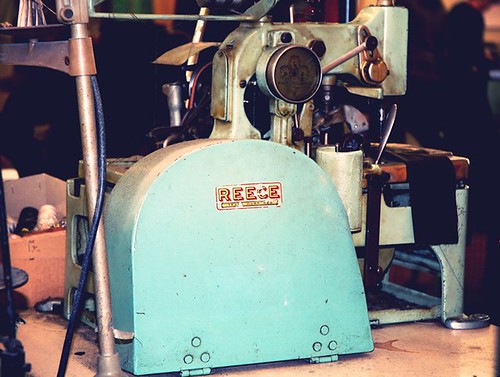
One of the machines in the factory.

It is always an absolute pleasure observing craftsmen at work. Long may these traditions continue and be supported. There should be a universal desire to make everything as well as possible. We should approach 'Made In England' knowing that there is a long history and tradition of producing certain products extremely well, for example jewellery, textiles, tailoring and shoes. Of course British manufacturing is much, much, smaller than in years gone by, there are always difficulties and some traditions or techniques have unfortunately disappeared. Of course it would be easier to produce things more quickly in other countries, but sometimes it is about establishing relationships too and keeping traditions alive where possible.

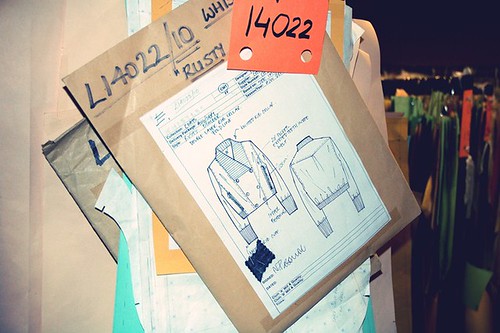
The pattern for one of the label's jackets.


Made in England airs on Channel 4 at 7.30pm on Friday 18th February and will be available on 4OD soon after.

Thursday, February 10, 2011

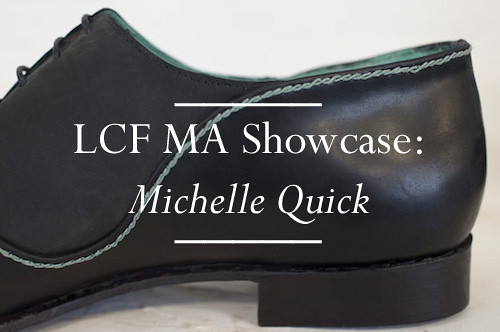
LCF MA Graduate Showcase: Michelle Quick


To celebrate the cream of the incoming crop of LCF MA graduates we have been speaking to each of our favourite students to learn more about their collections and their experiences at LCF. We kicked off this year's series with prize winning Matteo Molinari before turning our attentions to the wood craft of Yan Liang. Now it is time to highlight a hugely talented footwear design graduate that left this budding shoeist breathless.


Michelle Quick's graduation collection challenges traditional gender roles within craft practice by combining inherently feminine crafts with men's bespoke footwear. I was taken by her ability at combining various shoe age old making techniques with unusual materials. Entirely made by hand, the collection showcases intricate stitching, various welting techniques and utilizes cow horn as a structural and decorative element to stunning effect. Here we talk to the design talent to hear about her experiences at LCF, learn more about the processes and techniques used within the collections and reveal her hopes for the future...

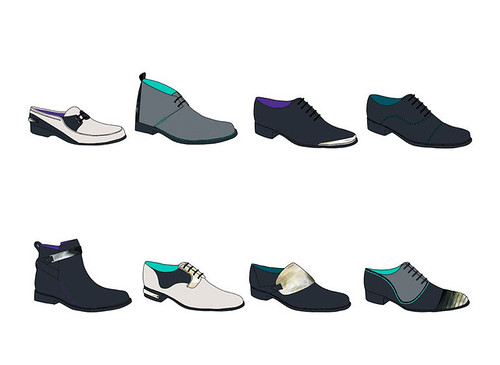
The collection in Illustator

SS: Congratulations on more than playing your part in an exciting MA show (in terms of menswear in particular). How did it feel seeing your finished designs on the catwalk?
Michelle Quick: Thank you, it was an amazing experience. Footwear is generally displayed in a static exhibit, which is great for getting to look up close and see the details but it's completely different to see them on the foot and in motion. It was important for me to showcase the collection in both ways, so I paired up with MA Menswear designer Mio Jin. We both admire each other's work and thought our collections worked well together. The show was great, it was so exciting and really the end of all the hard work that had led to it. The shoes are now on display at Victoria House.

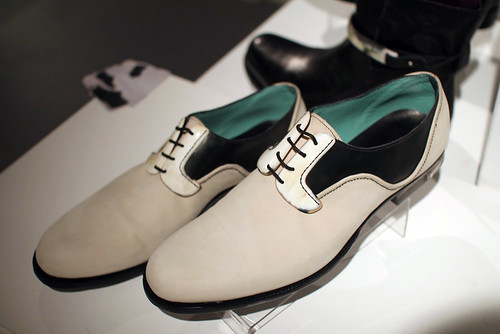
The Dress oxford catching the eye on the display at Victoria House

SS: Describe the moment you realised that you wanted to become a footwear designer?
Michelle Quick: I was attending The School of The Art Institute of Chicago, studying textiles and general art/design. When I took one of the shoe making classes in my 2nd year, something just clicked - I felt it combined all the disciplines I enjoyed into one craft. I continued to study footwear there and combine it with my other classes, I haven't stopped since.

The Derby shoe standing proudly at Victoria House

SS: What attracted you to the LCF (Cordwainers) MA course in particular? What was the best thing about your course? And the worst?
Michelle Quick: After graduating from SAIC, I felt I still needed something before I could start my career. Resources are limited in The States for shoe making and there aren't any schools that offer an MA in Footwear. The UK is a shoemakers mecca in comparison. Cordwainers has an incredible history/alumni list but the MA Footwear and Artefact programs at LCF are very new and innovative, which is a great balance.

The best part of the course is the resources that are available to you - amazing facilities, knowledgeable staff - and that you are encouraged to push boundaries and try new things. It's really a self-taught course, the resources are there and you have to be motivated and utilise them.

I wish the course would have been longer, maybe two years instead of a year and a half because it was so intense and you really had to put any outside priorities on hold. I do think the timing for releasing our final collections is good though, just before LFW.

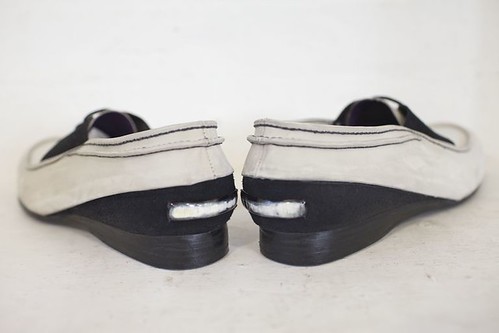
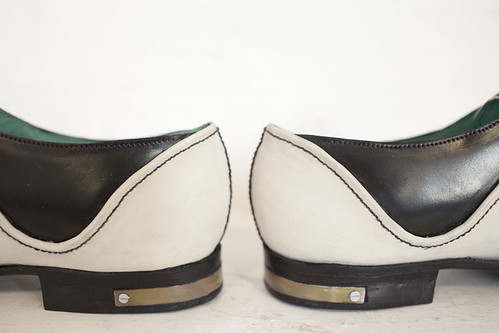
Boat Shoe. Nubuck and rough suede upper, concealed wedge and horn strip heel. Image by Tim Medley

SS: The collection challenges traditional gender roles within craft practice by combining inherently feminine crafts with men's bespoke footwear. Was this the driving inspiration behind it?
Michelle Quick: Definitely. I did a lot of knitting, weaving, and embroidery during my BA and when I came to London and started investigating the bespoke shoe shops here, I realised that a lot of crafts are still very gender specific. I wrote my thesis on the origins of gender roles in different crafts and how they can still hold true today. Obviously there are men who knit and women who make shoes or do wood-working, but there is still usually a dominant gender. For my final collection, I wanted to combine various crafts and make objects that feel somewhat neutral.
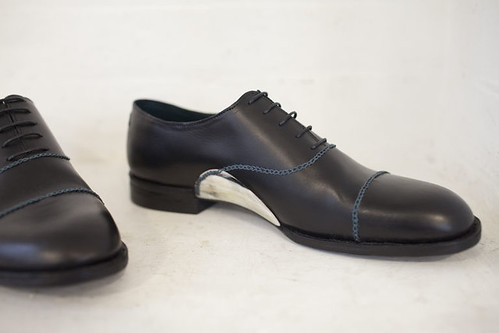
Stitch Oxford. Image by Tim Medley

SS: The collection features intricate stitching, various welting techniques and utilises cow horn as a structural and decorative element but how would you describe the collection in your own words?
Michelle Quick: For me, the collection is about balancing masculine and feminine characteristics - I used contrasting textures and style lines to establish that dialogue. I also wanted to creating something that felt modern and fresh even though I was using traditional craft techniques. Even though the designs are rooted in my concept and body of research, it was still about making shoes that people would desire and want to wear.

Boat Shoe with horn strip on the heel. Image by Tim Medley

SS: Could you talk us through a few of the main processes involved?
Michelle Quick: Hand-stitching onto leather was a new thing for me, it's very different than fabric because you can't make a mistake the same way you can with fabric because the hole from the needle is permanent. I had to measure and mark out all the stitch marks and really take my time with it. It changed the way I had to assemble the shoes.

Most of the shoes are hand welted. After the upper is lasted, you hand stitch a strip of leather (the welt) to the upper and through the insole - this stitching is hidden. You then stick the sole on and stitch through the welt and the sole - this is the stitching that is exposed around the shoe. It's an incredibly laborious process, you have to twist and wax your own thread and taper the ends so they can be attached seamlessly to flexible needles. You are stitching through very thick soling leather and have to make a hole first with an awl - my wrists were in a lot of pain for a while.

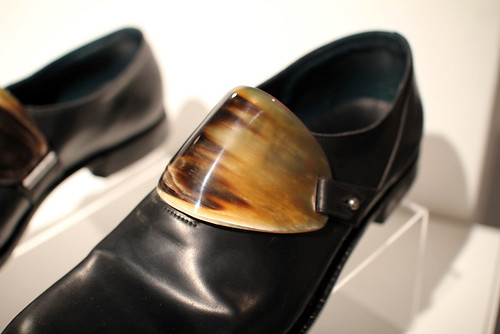
Horn quarter piece on the Monk Shoe

SS: Cow horn is one of the most prominent decorative and structural components in your collection. What attracted you to this material?
Michelle Quick: I've always been fascinated with horn objects, I love seeing old horn combs and caviar spoons in museums. The colours are so varied and you can polish it to such a high shine. It's a material that is present in all bespoke shoe houses (shoe horns, brushes, etc) but is rarely used on the shoes themselves. I was interested in how it could be used to adorn shoes in a new way.

It was difficult to figure out how to work the horn. There are very few resources online or in books and almost no companies still working with it. My initial research was quite frustrating. I was very fortunate to come across Abbeyhorn, the last remaining horn-workers in the UK (see below). After getting guidance from them, I was able to come back to my studio and experiment and figure out the process that worked for me. It does smell pretty bad (like burnt hair) when you are sanding and heating it, so my course-mates were never very happy with that.

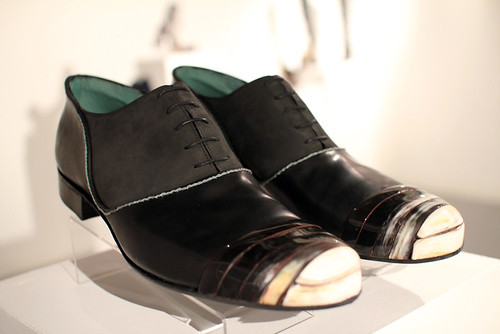
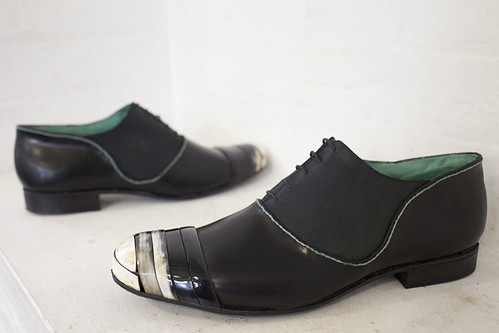
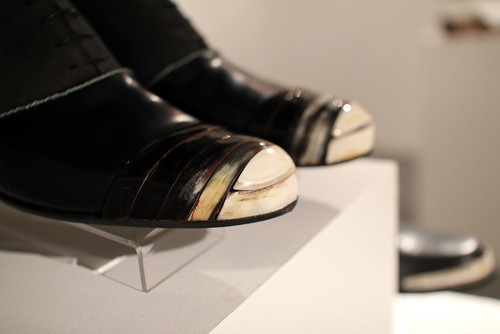
The cowhorn toe cap on the Dress Oxford. Image by Tim Medley

SS: How difficult was it to work with?
Michelle Quick: It's an unpredictable material, each horn is unique in it's colouring, it also has areas that are more dense so it doesn't always heat evenly and you end up with kinks when you mould it. I was obviously making pairs so if one piece didn't work out I generally had to redo both to make them match. It took me a while to get comfortable and figure out the best way to do things.

A closer look at the horn toe cap. Strips of horn have been sanded together.

SS: All of your products are, of course, handmade and feature intricate detailing. How long did each pair take to make?
Michelle Quick: All of the shoes had different areas that took more time than others, some have a lot of hand-stitching while others only a hint, some have a traditional welted sole and others a cemented sole, etc. I calculated that they all took between 30-60 hours each, depending on the level of difficulty. That is from patterning to finished product, but doesn't account for the few months when I was experimenting and prototyping.

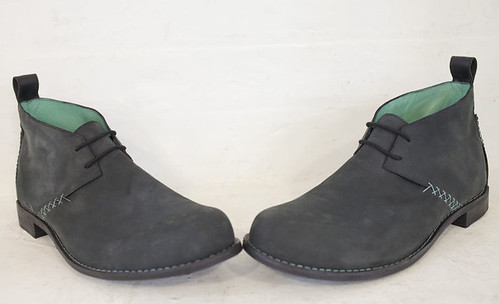
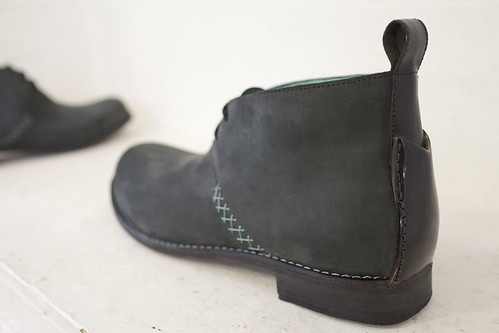
Desert boot in Nubuck and rough cut suede upper. Image by Tim Medley.

SS: In Abbeyhorn and Metropolitan Leather, you worked alongside some great craftsman, how did you find them and how receptive were they to your designs and what did they make of the collection?
Michelle Quick: The people I worked with were so amazing. I've found that if you are genuinely interested in someone's craft, they are more than willing to help you out or give you advice.

The quality of the veg tan leather at Metropolitan is incredible and the colourist Stuart can just look at the swatch you've brought in and mix up dye that's a perfect match instantly. They custom dyed all of my linings to match the threads and I also got soling leather from them.

Abbeyhorn was a great resource for me. They make mostly traditional horn objects and don't deviate from their catalogue too much, so I think they were happy to help me try and use the horn in a new way. I didn't understand the limitations of the material at first, so my ideas were a bit far fetched but the owner Paul helped show me what was possible and how it could be achieved.
I was also advised on my welting and other shoe making aspects by Carreducker. Welting is something you need to learn directly from a person (like most crafts), I had tried to teach myself from books but it was all the little nuances that James and Deborah taught me that allowed me to make shoes to the quality that I have.
I've had nothing but good feedback and support from everyone I've worked with, I feel lucky to have established relations with these companies.

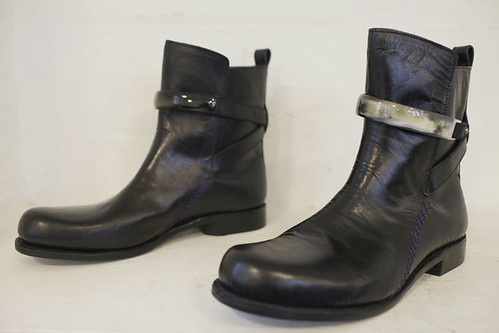
Jodhpur boot with horn and leather strap. Image by Tim Medley

SS: I know this is a difficult question but is there anything that you're most proud of?
Michelle Quick: I'd have to say I'm most proud of how much my skills have developed throughout this course. I feel that my design skills are much stronger and that the quality and speed of my shoe making has greatly improved. It's hard to believe that the course was only a year and a half because it feels like so much has changed.

SS: What advice would you give a prospective footwear design student?
Michelle Quick: I think that learning the making process can only make you stronger as a designer, the more you understand about the product, the more you can experiment and push the actual design.

A closer look at the handstitched upper with raw edge and Herringbone stitch on the Desert Boot. Image by Tim Medley

SS: Finally, what would you like to achieve in 2011 and beyond?
Michelle Quick: My dream is to find a job where I can have a balance between designing and making. The craft side is so important to me, but I don't necessarily need to be making shoes in a workshop all day. Equally, I wouldn't like just churning out designs that I didn't have a tactile hand in somehow. It's all up in the air right now, I want to stay in London for a while and I would like to continue with men's footwear. I think it will be important to work for established companies before trying to pursue anything on my own. Hopefully only good things are to come.

The stacked leather heel on the Derby. Image by Tim Medley.

If the above leaves you desperate for more, I happily point you in the direction of Michelle Quick's informative tumblr. There can be little doubt that this was a labour of love and the results surely make the hard graft worthwhile. The graduate ultimately showcases a real and exciting passion for shoe making. Each design is close to bursting point with meaningful details but nothing feels superfluous or unnecessary. There is a real balance between them. The diverse details combine to create shoes to truly covet. The real surprising element for me is that each shoe exudes a well crafted quality that is most rare to find in a graduate collection. I for one am excited to see what Quick does next but one thing is for sure, my feet will hopefully be treated to a pair one day soon.

Monday, February 7, 2011

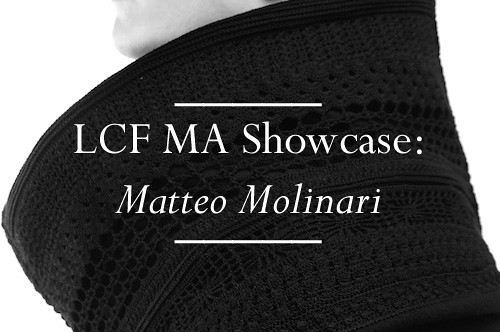
LCF MA Graduate Showcase: Matteo Molinari


Last Wednesday saw the first crop of fashion design graduates showcase their talents with the London College of Fashion MA show taking place in the ornate rooms of the V&A. It was a true celebration of emerging menswear design talent and certainly whet this blogger's appetite for the year ahead. To celebrate the cream of incoming crop of graduates we aim to speak to each of our favourite students to learn more about their collections and their experiences at LCF. First up, Matteo Molinari.

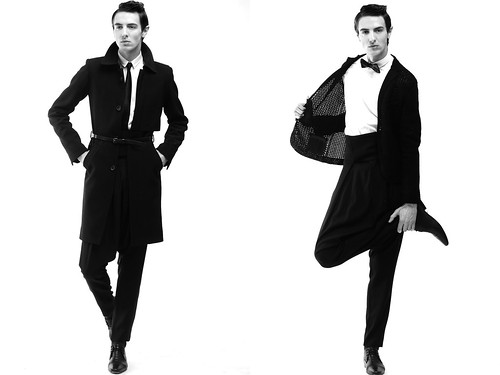
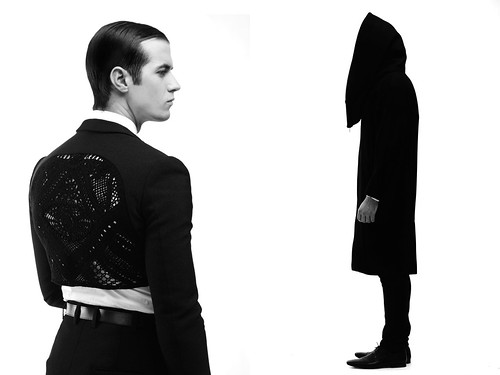
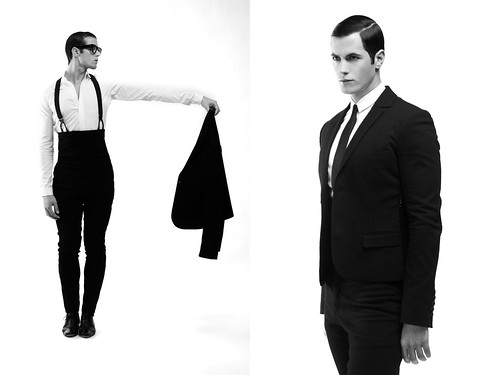
It was Matteo Molinari's crocheted tailoring and reimagined classics that made the biggest impact on the graduation catwalk and ultimately saw him walk away with the grand prize. His highly desirable and beautifully tailored collection fused modern tailoring with traditional craftsmanship to stunning effect. Drawing inspiration from his childhood fascination for the small dots, lines and circles printed onto white paper that his mother and sisters used to create crochet lace. Here, Molinari created patterns which were converted into pieces of crochet and put into panels of this largely sophisticated black and white pieces. This complex technique of combining crochet into the luxurious menswear fabric creates a dichotomy between what is traditionally seen as masculine and feminine. Here we talk to the design talent to learn about his experiences at LCF and his hopes for the future...

----------

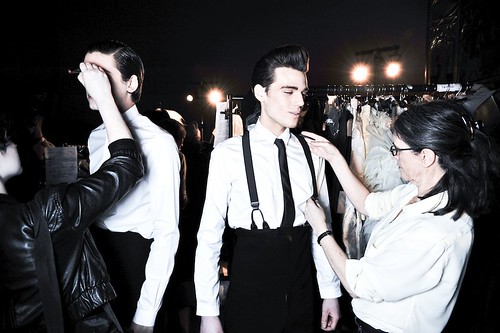
Applying the finishing touches to Matteo Molinari's prize winning collection. 
Backstage photography by Morgan O'Donovan

SS: Firstly, congratulations on more than playing your part in a dazzling, menswear rich MA show. How did it feel seeing your finished designs on the catwalk and ultimately winning the main prize?
Matteo Molinari: I felt honoured to have been chosen to be part of the V&A show. It’s a real event with press, buyers and huge media coverage. When I heard my name I was shocked and very happy at the same time.

SS: Describe the moment you realized you wanted to be a menswear designer?
Matteo Molinari: During adolescence I started to be interested in fashion, but it was a very long path for me to come to the complete acceptance that I wanted to be a designer. My previous degrees were a Communication BA and an MA in Philosophy of the Languages. It was only after these experiences that I started to work as a freelance design consultant and then began my Fashion Design and Technology MA.

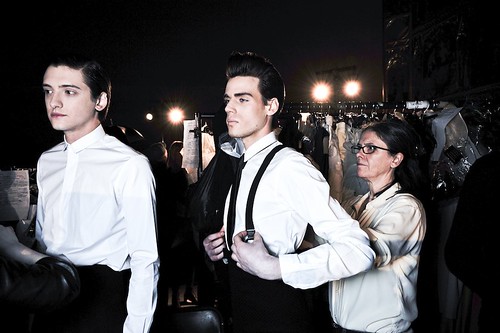
Applying the finishing touches to Matteo Molinari's prize winning collection. 
Backstage photography by Morgan O'Donovan

SS: What attracted you to the LCF MA course in particular? What was the best thing about your course? And the worst?
Matteo Molinari: LCF is famous for being well connected with the industry and well known for the high level of technical skills you can learn at this college. The tutors, lecturers and the technicians are very well trained and experienced, I learn so much from everyone of them and my collection is a reflection of my knowledge path. The only bad thing about my Masters is that there are so many things to do in so little time. Fifteen months is such a short time and this pushes you to work 24/7.

SS: Can you talk us through the inspiration for the collection?
Matteo Molinari: Usually young designers are experimenting more with shapes, extreme styles and eye-catching proposals and weird looks. Keeping this in mind, I tried to be different and began with the traditional male wardrobe, working on the essentials of menswear: the suits, the trench-coat, the coat and the white shirt. I changed proportions and I elaborated a personal silhouette: sharp for tailoring, structured and architectural for the coats adding the cross-gender twist of using handmade lace in a graphic and masculine way.

I’ve been focused on tailoring and hand-made crafts because these elements are a huge part of my Italian heritage. It sounds like a stereotype but I pay so much attention in the pattern cutting process to get the shapes I wanted. The silhouette is distinctive and the cut of the clothes accurate and thoughtful. The quality of the clothes was a central element. The structure of the collection reflects it: just tailored pieces, coats, trench coats, shirts and high waist trousers, no fancy or over styled outfits.

Backstage photography by Morgan O'Donovan

SS: What was your starting point?
Matteo Molinari: I started analyzing the meaning and the implication of symbols in the actual garment design.

SS: How would you describe the collection in your own words?
Matteo Molinari: Black, tailored, sinister, handmade, Psychic Youth, crochet lace, architectural shapes, androgynous, cut, cropped, NON, reworking men's wardrobe basics, European folk traditions.

Stunning detailing.
Backstage photography by Morgan O'Donovan

SS: Personally, I love the balance struck between traditional tailoring and textile techniques rarely used in menswear. One of the best examples of this is the crochet back tuxedo jacket. Could you talk us through some of the techniques used, for example the hand made crochet and your attraction to them?
Matteo Molinari: I was amused by the notation used to transcript the movements necessary to produce a piece of crochet lace. Small dots, lines and circles are printed on a white page to create intricate and beautiful pieces of work, if correctly interpreted by a skilled artist. I developed my patterns starting from the crochet panelling. I used crochet not like an embellishment but as a important part of the pattern. Crochet is a feminine technique, a knowledge shared between mothers and daughters in Italy. Doing menswear based on it pushed me to reflect about a lot of social and cultural implications related to gender. Not merely cultural concept of masculine and feminine but differences between art and craft and the unnatural.

SS: What type of man can you see wearing it?
Matteo Molinari: Confident and cerebral with a melancholic spirit.

A closer look
Backstage photography by Morgan O'Donovan

SS: I know this is difficult question to answer but have you got a favourite, anything that you were most proud of?
Matteo Molinari: The crochet back tuxedo jacket.

SS:Finally, what would you like to achieve in 2011 and beyond?
Matteo Molinari: Be free to decide what I care and what I don’t. Continue doing clothes for my SS 2012 collection. Be passionate in what I’m doing.

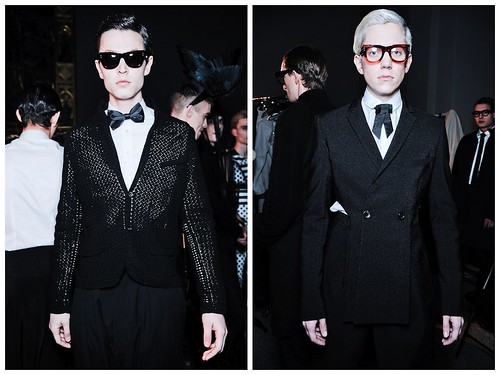
Two of Molinari's models mingling with the other collections.
Backstage photography by Morgan O'Donovan
----------

In addition to creating a collection that makes your heart skip a beat or two, Molinari's desire to breathe fresh life and excitement in to traditional skills and techniques should be applauded. The detailing of the pattern cutting, the sharp fit and the mixture of Italian manufacture, japanese fabrics, hand stitching and crochet produced by close family members makes this collection both luxurious and desirable but also hugely personal and emotional. I'll leave you with these fantastic look book shots by Christopher Agius Burke...

Photography by Christopher Agius Burke. Hair and makeup by Pace Chen.

Matteo Molinari’s collection will be available to order and a line of sunglasses and glasses is already available. I just can't wait to see this talent develop.

Tuesday, February 1, 2011

Experimenting with Bunney

Dipping a cautious toe in the waters of men's jewellery thanks to Bunney.

Now, regular readers will know that I struggle with men's jewellery. However, whilst blogging I have encountered two designers, Hannah Martin and Andrew Bunney, that have opened my eyes to this previously daunting realm of shiny embellishment. The latter, Bunney started in 2009 as a jewellery line that seeks to make simple things look beautiful, intriguing and understandable. Andrew Bunney longed to create objects that look like something one may be used to yet recast in a new light with precious metals, becoming new, yet at the same time, familiar. Ultimately, Bunney was drawn to the idea of coming up with something everybody or anybody could wear...even nervous individuals like myself. For the last few seasons, he has been quietly navigating an elegant and refined men's jewellery offering that have grabbed my attention and have left me reaching for my wallet. Last September I finally invested in a few items.


As you should all know by now, Bunney evolved from a single item - a large size silver pyramid stud which came in a set of three, in to a magpies heaven during the last instalment of the Showroom Next Door. However, as the Bunney range grows, his desire to create something quite unisex and versatile remains. Made by craftsmen in workshops around England, each piece is finished with care and attention before being hallmarked at the Goldsmiths’ Company, responsible since 1300 for testing the quality of gold and silver. I opted for the hammered badge and a slightly smaller version of the pyramid stud set. I picked the latter up over the weekend and have been experimenting with them ever since.


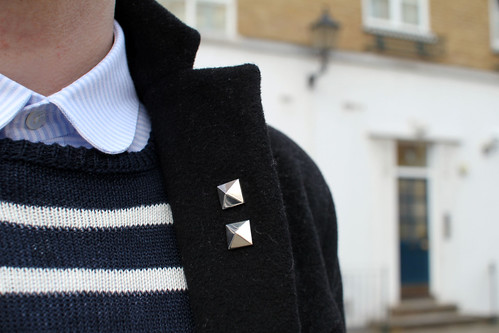
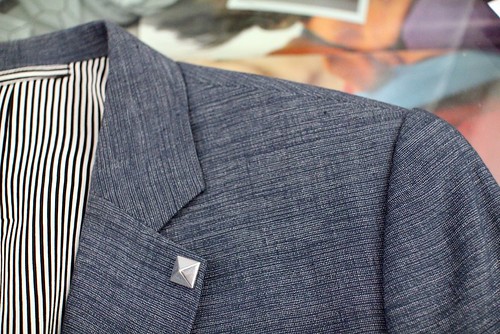
One of the facets that makes style in this country so exciting is how people can appropriate and interpret items and use them in a way unique to themselves. The pieces are meant for use with clothing and encourage the wearer to consider and compose a variety of combinations. Bunney says the concept focuses on giving freedom to the wearer “you wear them how you want, on a jacket or a shirt, together or separately”. The entire line not only facilitates individuality but downright encourages it. Ever since I first talked through the label with Andrew Bunney, I've daydreamed about my picks and the myriad of ways in which they will be worn. Over the last few days, I've experimented for real...

Two of the three pyramid studs worn with Crombie by ASOS Black, breton by E. Tautz and shirt by Patrik Ervell.  

Two of the three pyramid studs worn on the collar of Lanvin shirt under a sweater by COS

One of the three pyramid studs worn on the lapel of suit jacket by J.A Daye.

Inspired by Bunney's SS10 look book which showcase the likes of Clare de Rouen and Mr Hare wearing their choices extremely well and uniquely, I have strived to wear the studs a different way each day.  I might just be dipping one cautious toe in the the previously uncharted waters of jewellery but the likes of Andrew Bunney are tempting me to jump right in. 

Tuesday, January 25, 2011

Finding Marwood

Marwood AW11. Image by Emilie Bailey

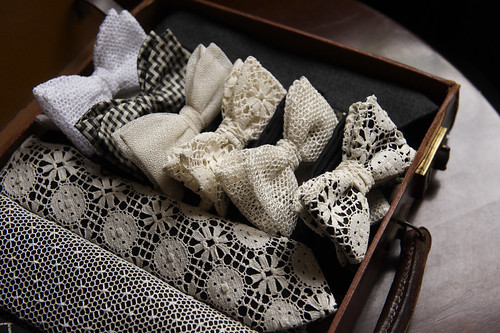
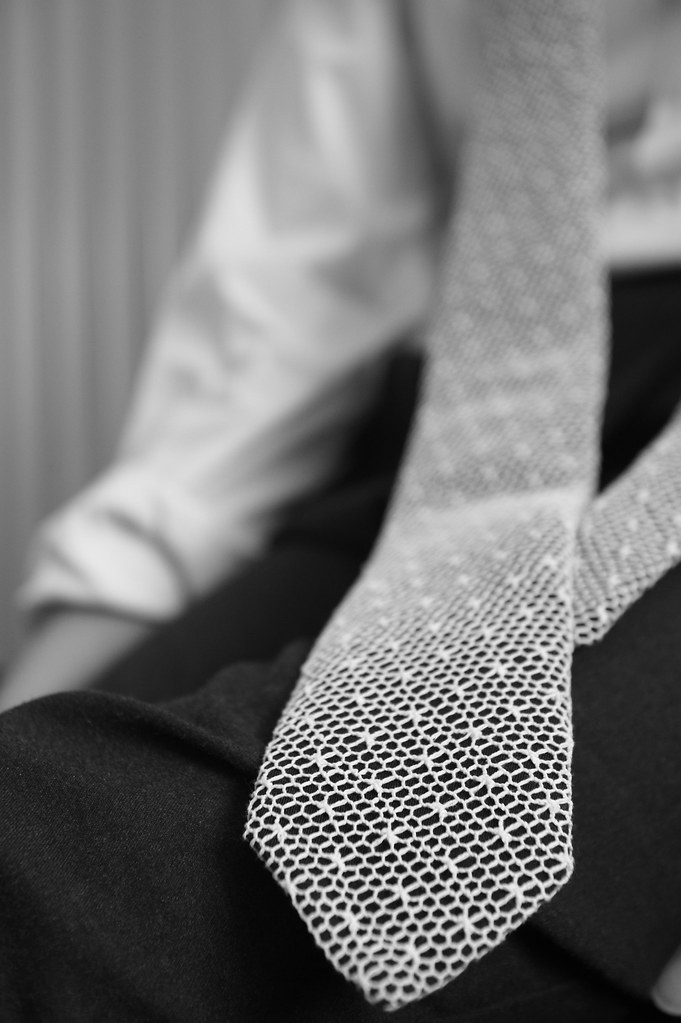
With each visit to b Store this regular shopper is left with a new discovery or idea to pursue. From the designers they stock to the people who shop there or those involved in the store in another way, it is clear that it is more a lifestyle than a store. Everything from the clothes hanging on the rails to the artwork displayed within it to the people which inhabit it, b is full of surprises. On my last visit, I was informed by an excited Matthew Murphy of a new British neckwear brand called Marwood. Soon after his enthused descriptions of the label's use of English lace on top of either silks or cottons to create beautiful ties and bow ties, in walked the lady behind the label, Becky French, armed with a vintage suitcase of samples. It was fate.

Launched for Autumn/Winter 2011, Marwood’s debut collection showcases an exquisitely crafted range of ties and bow ties made with the finest fabrics such as woven silk, wool and traditional English spun lace. Marwood believes in providing a product whilst drawing on and learning from established techniques and methods from the past in teams of craftsmanship and process. The label's neckties celebrate the traditions and techniques of a rich and distinguished heritage, yet still feel modern.

This photo is taken by Callum Toy who has been recording the majority of the behind the scenes of the factories and processes used by Marwood

Now, when we introduce a new label we tend to interview the creative mind behind it but in this instance, Becky French has made this  investigative blogger redundant. The reason being is that in 2009, French founded Marwood as a wonderfully insightful blog, an online sketchbook intended to collate the research that would inspire and drive the Marwood concept, attitude and ultimately, its first collection of neckties. It is an absolute joy to read and far more informative than my ramblings could ever be. The detail and evolving inspirations are there for all to read. Having studied Fashion Design at Kingston University, French moved to New York, where she worked as a menswear design assistant for Ralph Lauren’s Purple Label. On her return to London she joined Aquascutum as a womenswear designer, where she remained for four years before founding Marwood. Driven by her passion for pattern, colour, nostalgia and detail orientated design, Marwood has enabled French to develop close working relationships with some of the UK’s most skilled and experienced craftspeople.

Image shot by Emilie Bailey

One of the more intriguing facets of Marwood's sketchbook is the quest to manufacture a predominantly British-made product. This  desire has been a constant objective for Marwood, and whilst it is proving harder to find UK suppliers today, the ones that are out there are exceptional at what they do and it is absolute pleasure to read about her experiences. They represent the artisan skills that British manufacturing has always been known and appreciated for. Combined with a considered and thorough design process, working with these experienced factories helps to ensure that Marwood neckties are of a consistently high quality. The process is thorough, efficient and obviously well practiced.

Image shot by Emilie Bailey

Via her online sketchbook, French concedes that one of the highlights of starting Marwood has been the exploration of one product and delving in to the details of this accessory and learning about its components, its uses and its meanings. A tie might be commonplace object with commonplace connotations and it is certainly somewhat under appreciated in the modern world. What more, it is an object that can be visually achieved so quickly, easily and cheaply and cheaply, although those imitations won't have the lasting quality of a hand finished, English woven and made product with years of expertise behind it in the make. Marwood has become quite fond of this strange yet familiar object and will continue to explore the design subtleties and possibilities. The label's aim is to create innovative neckties, where each collection celebrates quality fabrics, interesting patterns and the best of British craftsmanship. Marwood's first collection has tried to cover a variety of needs and occasions by offering a range of fabrications including traditional Silk, Wool and English lace. The debut is undoubtedly hugely successful on all counts and I for one am excited to see the offering continue to grow.

Image by Emilie Bailey

Wednesday, January 19, 2011

Let it rain on Mount Street


We all grumble about the wet weather but rarely do anything about it aside from getting all wet and bothered. Thankfully, in 1823, Charles Macintosh developed the process of spreading rubber onto cotton to create the worldʼs first formal waterproof fabric, signaling the arrival of the original Mackintosh coat. Since then it has dedicated itself to keep the world stylishly dry. Today, Mackintosh is a firmly established brand with an almost cult status, especially in the Japanese market. Recognised for its unique hand made authenticity, the great British label produce outerwear for a diverse range of clients in Paris, Milan and Tokyo; including high profile luxury brands such as Louis Vuitton, Hermes, Gucci, Dior, YSL and fashion designers Erdem, Junya Watanabe and Nigel Cabourn to name but a meaty mouthful.  

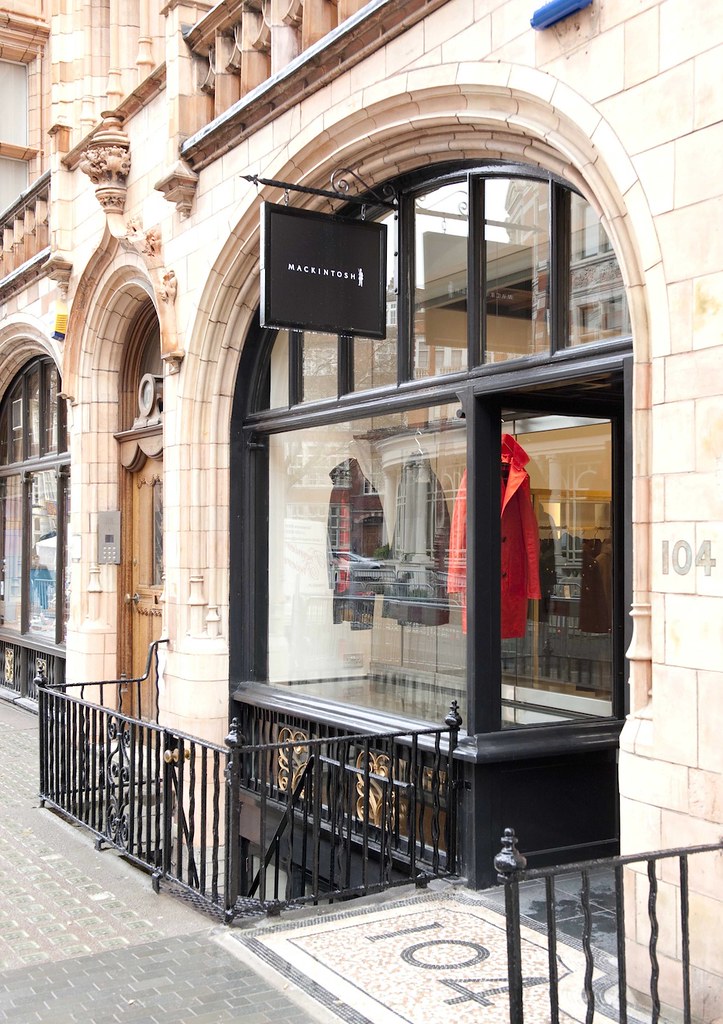
Thankfully, the brand resisted temptation from Japan and has opted to open its maiden store in the aptly, drizzly British capital.  The fabulously located Mount Street store officially opens its doors this evening but I was extremely fortunate to have Daniel Dunko, UK managing director of Mackintosh Ltd, as my store guide and brand enlightener earlier this afternoon.


I could not have had a better guide to talk me through the beautiful two story space than Mackintosh's very own Daniel Dunko. As he talked me through the latest designs, I was amazed to learn that he began his working life with Mackintosh as an apprentice on the factory floor back in 1983 and has since worked his way up to the position he hold now. He has worked for Mackintosh for twenty eight years come May. Following the three year apprenticeship he then served on the Cumbernauld floor for two years before embarking on a sales and marketing position at the company, then a directorship in 1996 and he never looked back. It was an absolute pleasure to hear about Dunko's experiences right from the craftsmanship of the factory floor to buyouts and investments. Unsurprisingly, he was hugely excited by the latest development in his brand's rich history. It was contagious.  

104 Mount Street is Mackintosh's flagship store. Prior to that they have enjoyed a strong concession presence, particularly in Japan and the rest of Asia but the brand began to put the plans together for their own space two years ago. Thankfully they only had their sights on London. Previously, the only retail presence they had in the capital was a shared store with Globetrotter located in Burlington Arcade which was forced to close following changes of ownership. Soon after they decided that they needed their own flagship store and, as they are a relatively niche brand, Mayfair and Mount Street were the perfect fit.


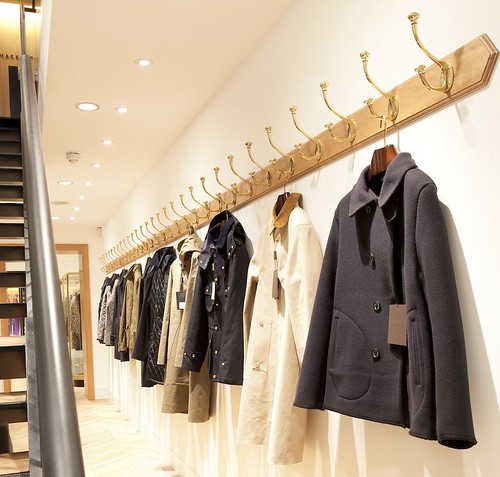
World famous interior designers and architects Wonderwall created the two floor, 90sqm state-of-the-art store and key features include an interior in tune with the modern Mackintosh brand and is truly inspired by its British craftsmanship. The design sought to showcase the brand's rich history, fruitful archives and latest ranges in a welcoming consumer friendly environment. For me, the design highlight has to be the three display cases showing iconic pieces from the Mackintosh's history. Since its inception, the brand has always been at the forefront of outerwear design and these display cases are a welcome reminded. From the Army coat from the 1930s which was a very heavy, rubberised bonded twill, to the a Dispatch Riders coat worn in the second World War to help deliver on deliver messages to the troops via motorcycles on the front line, on to to the British Rail days and outfitting rail staff in the 70s.


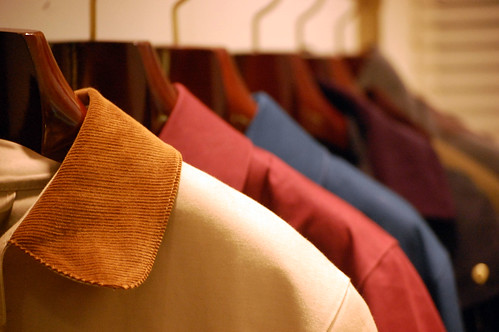
Mackintosh is undoubtedly a brand of modern heritage built on true craftsmanship and a two hundred year history. If you were in any doubt, the Mount Street store gently reminds you at every turn, from  the encased vintage pieces to the feel of their latest garments which hang invitingly on hooks and rails. Every genuine Mackintosh garment is carefully hand made by skilled craftsmen who serve a three-year apprenticeship to perfect the techniques required to make a true mackintosh. With its factory in Cumbernauld, Scotland focused on hand made outerwear, Mackintosh also owns a second factory in Nelson, England producing the machine made side of its collections. The brand have sixty people in the Lancashire factory and about sixty seven in the factory in Scotland. Production wise it is similarly equally split. The Scottish factory creates all of he handmade pieces, and the factory in England concentrates on the machine work with cashmeres, wools, gabardines. I was amazed to learn that the label produce around thirty five thousand garments apiece at these pillars of British manufacturing.


In terms of design, the brand's archive pieces are hugely important and the teams in both Glasgow and Japan continue to rework, renew and reinvigorate items of yesteryear for the future generation of Mackintosh wearers. The archive is approximately five hundred pieces strong, many of which are the results of collaborations, from catwalk piece for Louis Vuitton to Balenciaga, Comme des Garcons to Yohji Yamaoto and shortly the fruits of the design partnership with Kitsune. Having had my interest in the latest collaboration piqued after the Voyageur collection received a fair amount of blog coverage in the run up Christmas, this was the first opportunity I had to see it in the cloth and I was not left disappointed.  This is a happy marriage of two like minded brands, one from a manufacturing background and one from a design perspective combining to create truly covetable outerwear. Fittingly, I was particularly taken with the London. Stunning.


The unveiling of this impressive store, coupled with the brand’s British heritage and modern cuts, truly confirms the resurgence of the brand. Mackintosh will never forget that the rubberised coat was one of the most creative and revolutionary innovations that changed the lives of so many during that era.  However, most interestingly the brand keeps evolving and offering timeless contemporay collections. Mackintosh is the original British rainwear brand, long may it continue. Let it rain.

(Pleased with myself as I managed to make it through to the end of the post without bursting in to Mark Morrisons' classic)